The audit that used to eat a day.
How the teams running Retail Intelligence actually use it — a ranked worklist instead of a shelf walk, a report instead of a spreadsheet, and a planogram check that no longer needs a clipboard.
There's a ritual almost every retail team knows. Someone prints the planograms, takes a clipboard, and walks the store — aisle by aisle, shelf by shelf, comparing what's standing against what was planned. It takes the better part of a day for one store. The notes get typed up, emailed, summarized, and by the time head office reads them, the shelf has already changed.
We built Retail Intelligence with one supermarket chain, and the most honest way to describe what it changed is to describe what the people using it do now instead.
The morning worklist
The day starts at a dashboard, not an aisle. Overnight, the system has compared every captured shelf against sales and surfaced the handful of things worth a human's attention — a top seller that stopped selling, facings sitting empty on the best row in the store, a shelf that hasn't been photographed in too long. Each one is ranked by the revenue it puts at risk, so the list reads top-down as what matters most this morning.
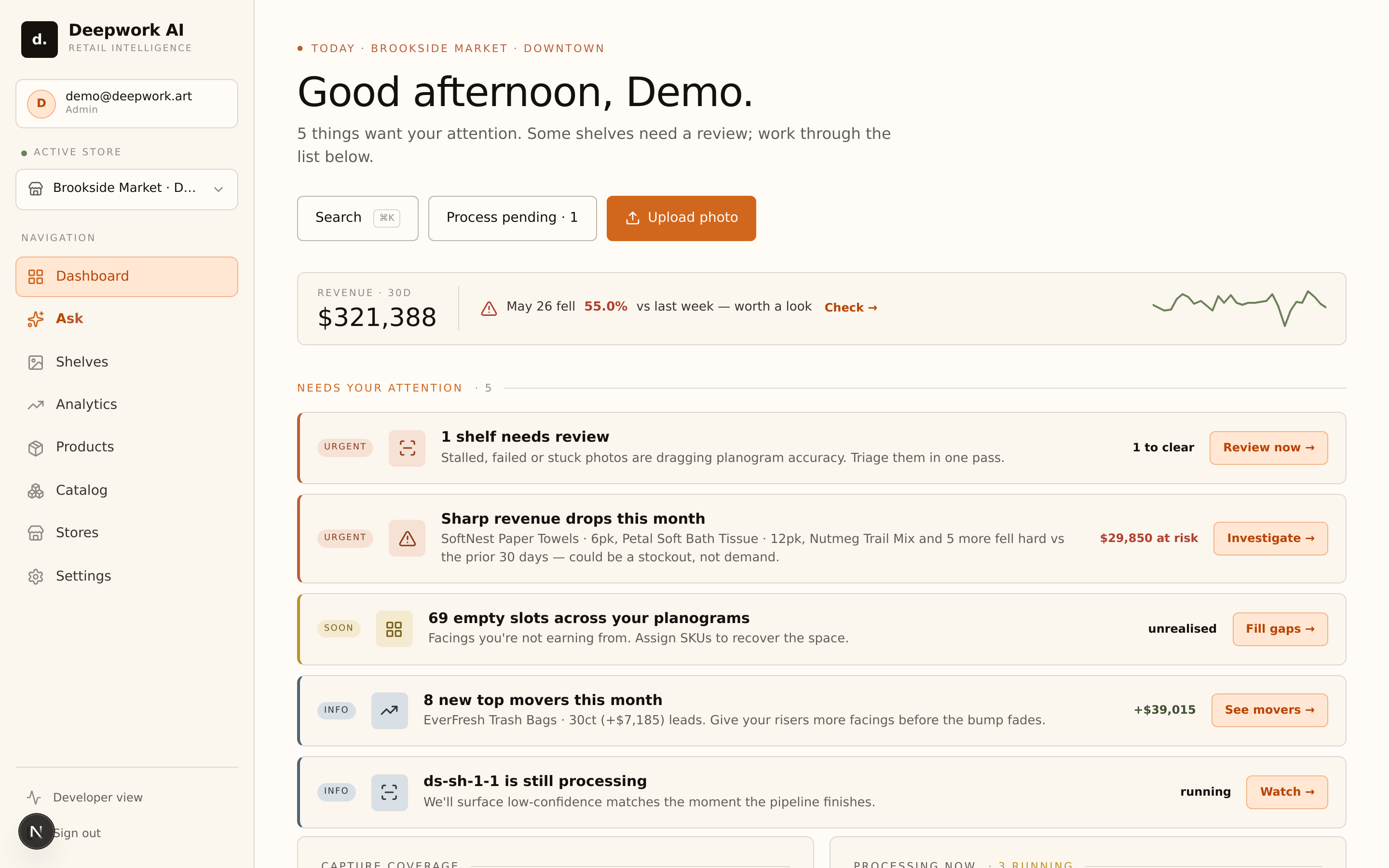
That inversion is the point. Nobody reads dashboards for a living; the worklist means nobody has to. Ten minutes with a coffee replaces the fishing expedition through spreadsheets — the question is no longer what happened? but which of these five things do we fix first?
There's a ritual almost every retail team knows.
The capture habit
Feeding the system became part of a walk people were already doing. A team member on the floor photographs shelves with a phone — no rigs, no cameras bolted to ceilings — and about ninety seconds later each photo is a structured shelf: every product matched to the catalogue, counted, priced, placed in its row. When the system isn't sure about a match, it says so and asks a person, which is precisely why the team trusts what it doesn't ask about.
The weekly report
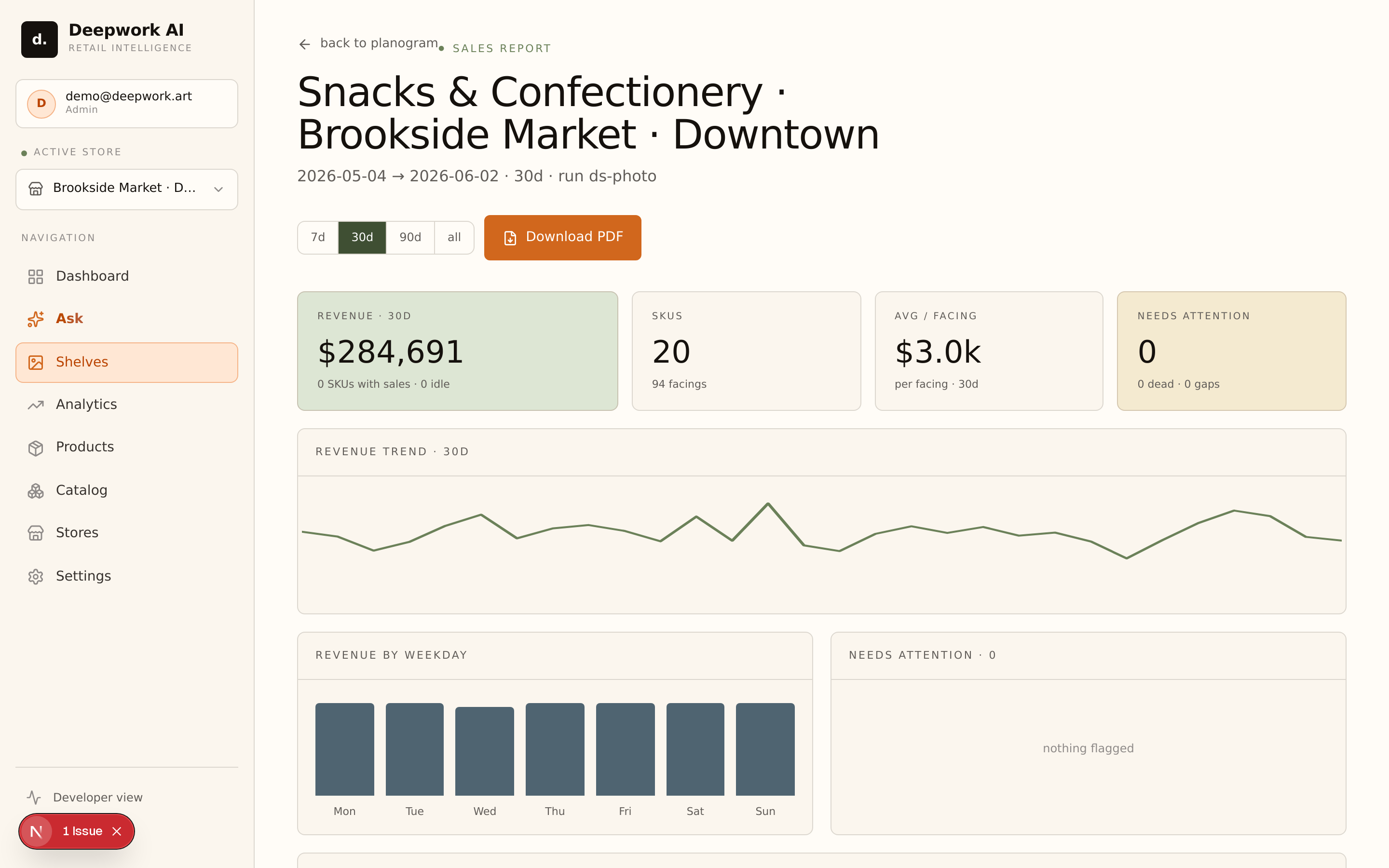
The artifact that travels furthest is the shelf report. Every shelf rolls up into one page — revenue, SKUs, facings, the 30-day trend, revenue by weekday — exported to PDF in a click and handed to store ops. The conversations it started sound different from the old ones: less I think that row is underperforming, more row three earns a fraction of row two, and here's the trend — swap them and let's see.
What "easier" turned out to mean
The hours didn't disappear; they moved. Time that used to go into collecting the truth — walking, counting, typing — now goes into acting on it. Head office checks a store's planogram compliance from a desk instead of an airport. The audit that ate a day runs itself overnight, and the day goes to the fixes.
"We finally know which shelf is pulling its weight — and which one isn't. The audits that used to eat a day now run themselves." — ops lead at the chain (name on request)
If this sounds like your floor
If your team still audits shelves with a clipboard, book a call — thirty minutes, on the live product, reading real shelves. Or start with what the product looks like.
The client stays anonymous until they're cleared to be named. Dashboards shown run on a fictional demo store built for public sharing; the workflows are the real ones.